How to Transform Frontline Execution Data into AI-Ready Insights for Smarter Manufacturing
Data is the driving force behind operational transformation. From predictive maintenance and AI-driven insights to IIoT connectivity, companies rely on manufacturing analytics to identify opportunities for continuous improvement, improve quality, and optimize production performance.
As manufacturers accelerate investments in automation and artificial intelligence (AI), the quality of their operational data has never been more important.
AI is only as valuable as the data it receives. While automated systems generate vast amounts of data, manual workflows—which still account for more than 70% of factory tasks—often remain a blind spot and one of manufacturing’s largest untapped sources of operational intelligence.
These processes frequently contribute to variability and inefficiency, yet they rarely receive the same level of visibility or data-driven insights as automated systems.
Capturing frontline execution data provides manufacturers with deeper visibility into how work is performed, while giving AI the structured data it needs to identify process variation, recommend improvements, and optimize production.
This is where augmented intelligence comes into play.
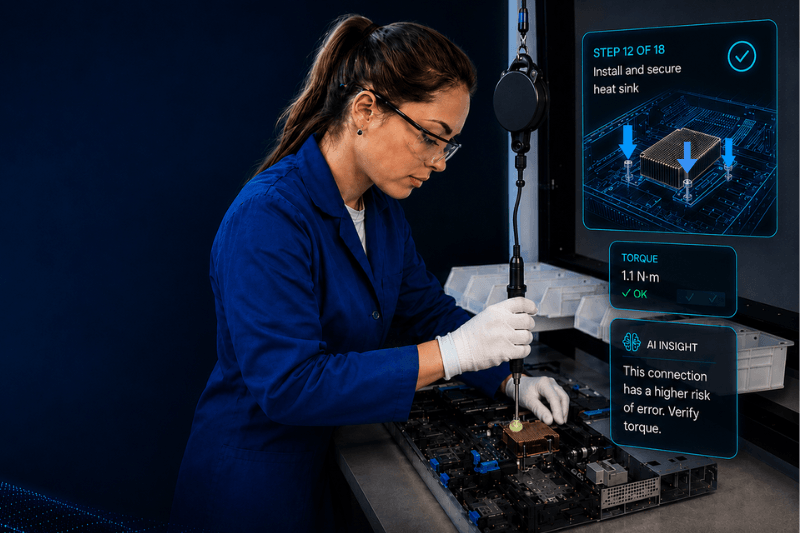
Rather than replacing workers, it enhances human expertise by combining augmented reality (AR) guidance with AI to improve how complex manual work is executed.
This is the approach behind LightGuide’s Augmented Intelligence platform, which digitizes manual workflows, provides real-time guidance for frontline workers, and enables enterprise connectivity through automated data capture.
By making manual execution visible and measurable, manufacturers uncover operational insights that transform a longstanding blind spot into a source of continuous improvement.
Imagine being able to pinpoint exactly where bottlenecks or defects occur, or ensuring operators consistently follow standard operating procedures (SOPs).
Keep reading to:
- Discover why manual process data is a critical component of manufacturing analytics and AI-ready operations.
- Learn how to capture and use manual process data to improve quality, productivity, workforce performance, and continuous improvement.
- See how LightGuide’s Augmented Intelligence platform bridges the gap between manual work, AI, and enterprise manufacturing systems.
IN THIS ARTICLE
From Manufacturing Analytics to Augmented Intelligence
6 Ways to Use Augmented Intelligence to Improve Manufacturing Operations
Building an AI-Ready Manufacturing Analytics Strategy
How LightGuide Turns Execution Data into Augmented Intelligence
Connecting Frontline Execution to the Digital Thread
From Manufacturing Analytics to Augmented Intelligence
Manufacturing analytics have traditionally focused on measuring past performance. But as manufacturers invest in AI and connected operations, they need deeper operational visibility into how work is performed to identify opportunities to standardize work, reduce variability, and continuously improve performance.
Augmented intelligence extends manufacturing analytics beyond historical reporting by automatically capturing execution data from manual workflows and connecting it to enterprise manufacturing systems.
Every completed step, quality confirmation, cycle time, and operator interaction contributes valuable operational context that helps manufacturers understand where variation occurs across people, processes, and production, revealing patterns and opportunities for improvement that would otherwise be difficult to see.
By automatically capturing and analyzing this execution data, LightGuide gives manufacturers continuous visibility into manual operations, creating the execution intelligence needed to identify patterns, improve workflows, and make informed decisions.
6 Ways to Use Augmented Intelligence to Improve Manufacturing Operations
By automatically capturing and analyzing execution data from manual workflows, augmented intelligence helps manufacturing teams answer critical questions, such as:
- Where are manual tasks slowing down production, and why?
- What are the most time-consuming or error-prone steps, and how can they be redesigned to improve quality and throughput?
- Are there variations in execution across shifts or teams?
- How does adherence to SOPs correlate with defect rates and cycle times? Where are the largest gaps?
- Are workstation layouts contributing to inefficiencies or ergonomic challenges that impact worker productivity?
- Are training programs effective in ensuring SOP compliance and minimizing variability?
Answering these questions enables manufacturers to:
- Detect and resolve defects at the source through root cause analysis, reducing rework and scrap
- Optimize task sequences and workstation layouts to improve efficiency
- Standardize workflows and improve SOP adherence across shifts and locations
- Reduce variability that impacts quality and productivity
Here are six practical ways manufacturers are using augmented intelligence to improve manufacturing operations:
1. Identify Bottlenecks and Increase Productivity
Manual workflows often contain hidden issues that can disrupt production flow. Capturing data from these workflows can help manufacturers identify bottlenecks, streamline processes, and increase throughput.
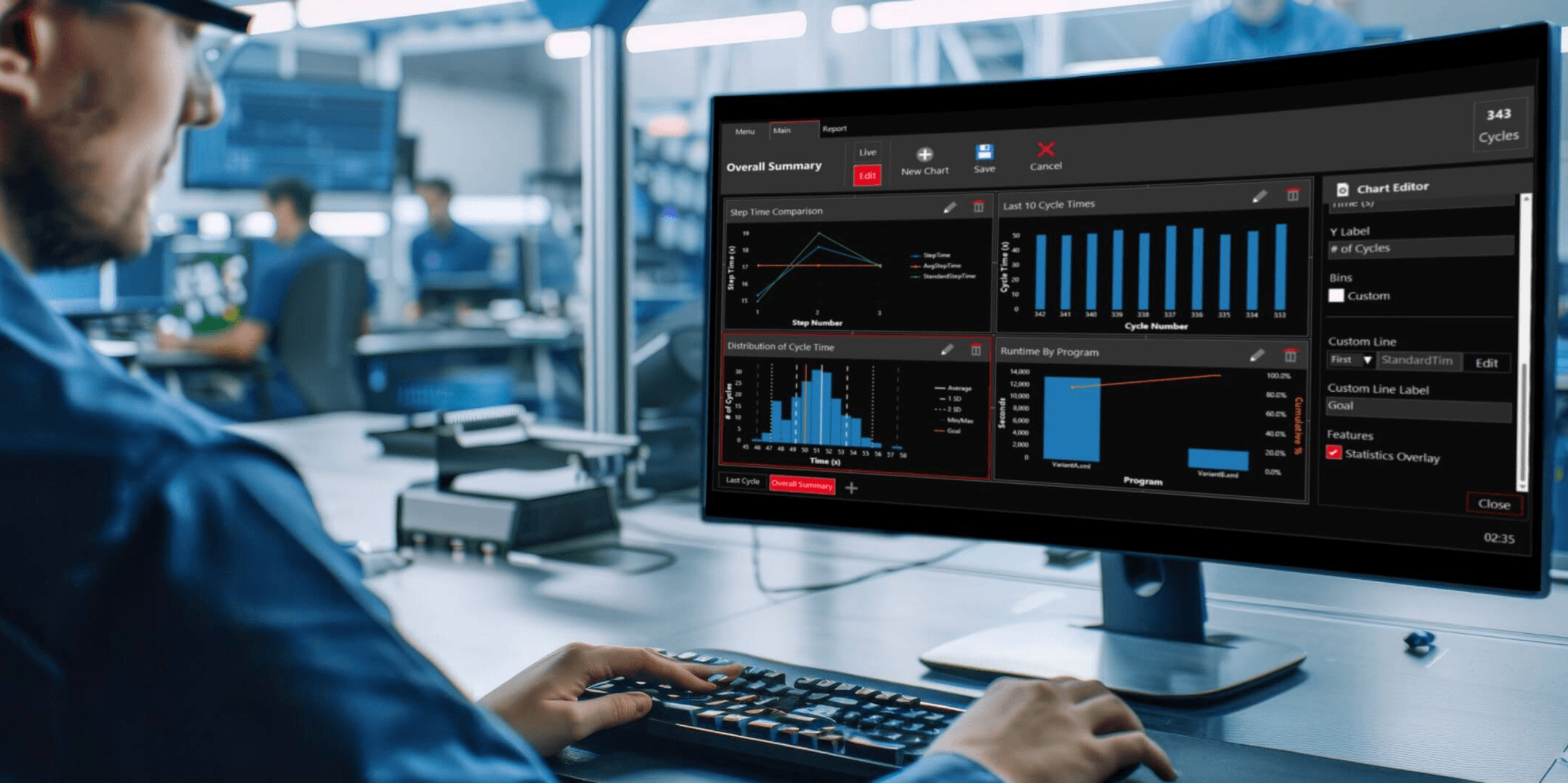
Tracking step and cycle times can reveal tasks that consistently exceed standard times, highlighting bottlenecks and opportunities to optimize task sequences.
At the workstation level, operators can use tools like LightGuide’s Data Hub to monitor these metrics in real time, enabling them to adjust pace accordingly. Meanwhile, line supervisors can gain visibility into performance trends across workstations.
The impact: Identify bottlenecks, optimize production flow, reduce cycle time, and increase throughput.
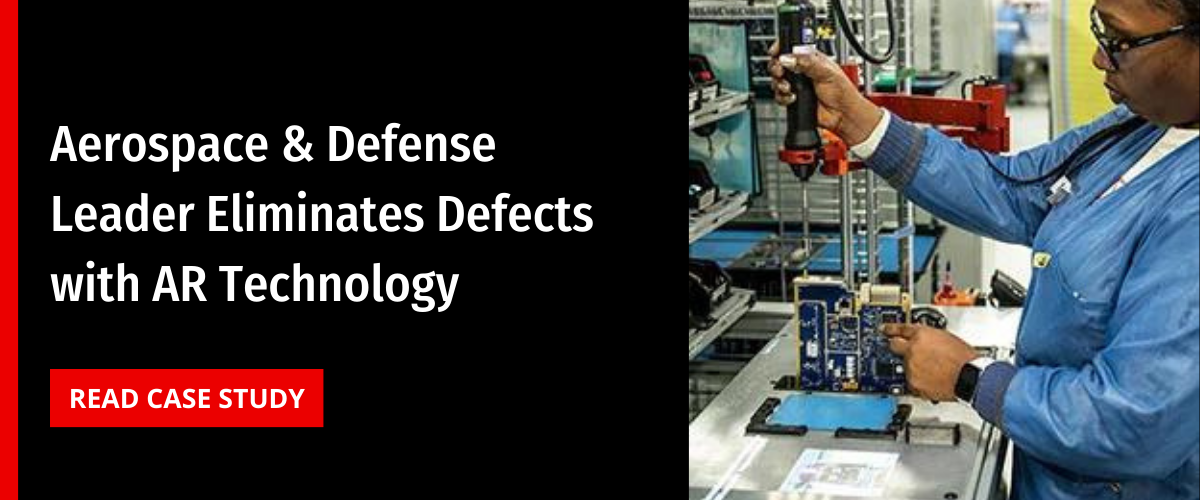
Case study: Learn how L3Harris eliminated assembly-related defects and reduced changeover time per variant by using LightGuide for guidance and confirmation on high-variation lines. Read the full case study here.
2. Reduce Defects and Improve Quality
Manual workflows are often prone to errors caused by missed steps or deviations from SOPs. This variability makes standardization challenging. Tracking each task in real time can help enforce SOPs, reduce variability, and ensure consistency across shifts.
For example, LightGuide’s AR work instructions can flag skipped steps in real time, allowing operators to correct mistakes and prevent defective parts from moving downstream. Data-driven insights also ensure that quality-sensitive tasks—such as assembly, inspection, and testing—consistently meet required standards, transforming quality assurance from reactive to proactive.
The impact: Detect errors at the source, proactively reduce defects, and minimize costly rework.
Case study: Using AR work instructions, this manufacturer reduced errors in hydraulic hose systems from 769 defective parts per million to zero, saving OEMs millions in FTC calculations for final assembly. Learn how here.
3. Standardize Workflows Across Shifts and Locations
Variability in manual workflows, particularly across shifts or locations, is another common challenge that leads to inconsistent performance and quality. Without standardized processes, ensuring repeatable outcomes becomes difficult.
By analyzing data from manual workflows, manufacturers can identify inconsistencies in task execution and enforce standardization across shifts and locations.
For example, tracking cycle times, defect rates, and process adherence can highlight deviations between shifts. These insights enable targeted retraining or process adjustments to ensure consistency, particularly in high-mix or multi-shift environments.
The impact: Enforce SOPs, reduce variability, and improve quality.
Case study: After implementing LightGuide on a production line with four workstations and nearly 100 parts bins, this transmission supplier eliminated process confusion, reducing cycle time dramatically and improving quality by 100%. Find out how, here.
4. Improve Workforce Performance
While manufacturing analytics often provide leaders with a system-wide view of operations, many organizations overlook a critical opportunity: empowering operators with real-time data at the point of work.
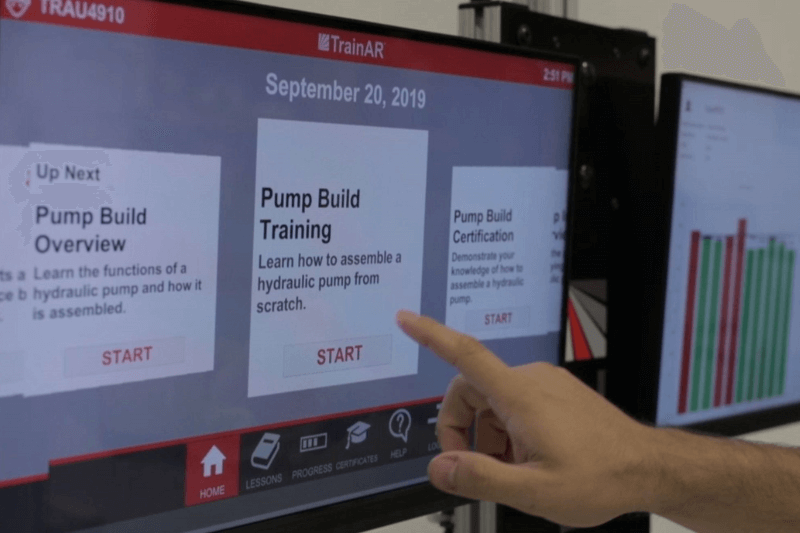
Traditionally, workers have depended on supervisors or engineers to identify and implement process improvements. However, access to real-time feedback enabled by data allows operators to self-correct and address inefficiencies directly at the source. For example, projected AR work instructions can guide operators through complex tasks step-by-step, ensuring efficiency and accuracy.
According to the Manufacturing Leadership Council, AR technology can improve frontline worker productivity by as much as 50% and reduce human error by up to 90%.
The impact: Empower decision-making and problem-solving on the factory floor to enhance productivity, accountability, and continuous improvement.
5. Improve Training
Manual process data also plays a critical role in improving training effectiveness. By capturing and analyzing manual workflow data as part of broader manufacturing analytics strategies, companies can:
- Identify skill gaps: Metrics such as task completion times and error rates help identify areas where workers may benefit from additional training.
- Enhance training effectiveness: Insights into performance trends allow organizations to design training programs that proactively address common challenges.
- Accelerate learning curves: AR guidance enhances on-the-job training by providing real-time feedback. This shortens ramp-up times for new or reassigned employees, enabling them to achieve productivity goals faster.
According to research from the World Economic Forum, businesses have reported that AR improved training effectiveness by as much as 80%.
The impact: improve workforce readiness and accelerate upskilling while reducing the time and cost associated with traditional training methods.
Case Study: Using AR work instructions, this EV innovator optimized training and assembly workflows to achieve breakthroughs in quality and productivity, including a 50% decrease in cycle time and a 75% decrease in training time. Discover how here.
6. Smarter Resource Allocation and Decision-Making
Every decision on the factory floor—from optimizing production schedules to improving quality—depends on clean, actionable data. Without this information, manufacturers miss opportunities to optimize manual processes.
By capturing manual process data as part of broader manufacturing analytics strategies, companies can better align labor, equipment, and materials with production demands—reducing waste and maximizing output.
The impact: Smarter staffing decisions, optimized resource allocation, minimized downtime, and better operational efficiency.
RELATED ARTICLE: 6 Uses of Augmented Reality for Manufacturing in Every Industry
Building an AI-Ready Manufacturing Analytics Strategy
As manufacturers accelerate AI adoption, many organizations assume the biggest challenge is selecting the right AI technology. In reality, the bigger challenge is data readiness.
Artificial intelligence cannot improve manual processes it cannot see.
Without visibility into how manual work is performed, manufacturers limit the value AI can deliver today while delaying future capabilities such as adaptive workflows, predictive quality, and intelligent process optimization.
1. Build Visibility Through Digital Workflows
Unlike automated equipment, manual workflows often lack the tools needed to capture execution data in real time. If they’re measured at all, it’s usually through manual observations or after-the-fact reporting, meaning inefficiencies and quality issues are often discovered only after they’ve already affected production.
Without real-time visibility into manual execution, manufacturers are left guessing where variation occurs, why defects happen, and where opportunities for improvement exist.
Digitizing manual workflows with tools like AR work instructions allows companies to capture AI-ready manufacturing data and analytics as tasks are performed, gaining visibility into key metrics such as step times, cycle times, defect rates, and more.
Beyond these performance metrics, LightGuide automatically records operator IDs, timestamps, and serial numbers. Together, these create a comprehensive digital execution record that strengthens traceability, supports regulatory compliance, and provides AI with the rich operational context needed to power advanced analytics, predictive insights, and future intelligent manufacturing initiatives.
As a result, manufacturers gain visibility into performance trends across workstations, work cells, shifts, and facilities, enabling them to identify inefficiencies, standardize processes, optimize productivity at scale, and make more informed operational decisions.
RELATED ARTICLE: Digital Work Instructions Explained: The Ultimate Guide
2. Prioritize Clean, Structured Execution Data
Artificial intelligence is only as effective as the quality of the operational data it receives.
While automated equipment continuously generates structured logs, manual processes often rely on human observation or manual data entry, making execution records more susceptible to inconsistencies, missing information, and human error. When execution records are incomplete or inconsistent, AI models inherit those inaccuracies.
Compounding this challenge is the sheer volume of data generated on the factory floor. Without a standardized way to capture, organize, and analyze this execution data, manufacturers risk losing valuable operational insights while limiting the effectiveness of AI analysis.
LightGuide’s Augmented Intelligence platform minimizes reliance on manual data entry by automatically capturing and organizing key performance metrics, while detecting anomalies to support reliable AI data modeling.
3. Connect Execution Data Across the Manufacturing Enterprise
Manufacturing environments often involve a mix of legacy systems, modern automation, and manual processes. This complexity often results in disconnected systems and data silos that inhibit the seamless flow of information across operations.
Unlike automated processes, which often benefit from built-in connectivity and analytics, manual workflows frequently operate in isolation. Without integrated tools or frameworks, incorporating data from manual workflows into broader manufacturing analytics platforms can be a complex and resource-intensive process.
Bridging this gap is essential, as true operational intelligence requires a unified approach to data management. For instance, LightGuide makes it possible to connect manual process data with MES, ERP, PLM, QMS, and analytics platforms, enabling manufacturers to gain a more complete understanding of operations.
When execution data flows across these enterprise systems, manufacturers gain a complete operational picture that supports continuous improvement, AI-driven analytics, and smarter decision-making.
RELATED ARTICLE: Digital Work Instructions Explained: The Ultimate Guide
How LightGuide Turns Execution Data into Augmented Intelligence
LightGuide’s Augmented Intelligence platform serves as the operational layer connecting frontline workers, AI, and enterprise manufacturing systems. By digitizing manual workflows, capturing structured execution data, and delivering real-time guidance, LightGuide transforms frontline execution into actionable operational intelligence.
By bringing frontline execution into the digital thread, LightGuide connects execution data, AI-driven insights, and frontline guidance within a single operational platform, giving manufacturers the visibility needed to continuously improve human performance, strengthen AI analysis, and optimize operations across the enterprise.
Standardize Execution with Real-Time Visual Guidance
Artificial intelligence can identify patterns, surface insights, and recommend actions, but those insights only create value when they influence execution. Designed with frontline workers in mind, LightGuide connects digital intelligence with physical execution by bringing AI-driven insights to the point of work.
Instead of relying on paper instructions, memory, or tribal knowledge, manufacturers can transform standard operating procedures into intelligent, adaptive workflows that deliver real-time guidance, validation, and feedback to help operators perform complex manual tasks with greater consistency and confidence.
With LightGuide, data-driven insights become part of the workflow itself. Rather than waiting for post-production reports, operators receive real-time feedback and performance metrics as work is being performed, helping them stay on pace and maintain consistent execution. Guidance can also adapt dynamically based on production requirements, operator experience, language preferences, or other operational conditions, delivering the right guidance for every situation.
By embedding digital intelligence directly into the workflow, LightGuide helps manufacturers standardize execution across operators, shifts, facilities, and product variants without sacrificing flexibility. Operators receive the right guidance at the right moment, while built-in validation helps ensure critical steps are completed correctly before work continues.
The result is a manufacturing workforce that learns faster, executes more consistently, and produces higher-quality outcomes from the very first build.
Capture Execution Data at the Point of Work
Every interaction with a LightGuide workflow automatically generates structured execution data as work is performed, including operator IDs, serial numbers, timestamps, step times, cycle times, error rates, and other valuable metrics.
This creates a complete digital execution record that strengthens traceability, supports regulatory compliance, and provides manufacturers with the clean, structured data needed to build reliable AI models.
By making manual process data visible and measurable, LightGuide transforms a longstanding manufacturing blind spot into a valuable source of operational intelligence.
- Pinpoint bottlenecks and root causes of slowdowns or defects
- Track adherence to SOPs across operators, shifts, and locations
- Identify the most time-consuming or error-prone steps
- Analyze workstation layouts and ergonomics to improve safety and performance
- Correlate training effectiveness with cycle times, quality, and rework rates
Connect Frontline Execution with Enterprise Systems
Capturing execution data is only the first step. The real value comes from putting that information to work across the manufacturing enterprise.
With LightGuide, manual process data can be shared with enterprise systems or exported for AI analysis, making it easy to connect frontline execution with MES, ERP, PLM, QMS, manufacturing analytics platforms, and continuous improvement initiatives.
This seamless flow of information across the digital thread gives manufacturers a more complete view of production, combining execution data with engineering, quality, and operational systems to support better decisions across the organization.
Operators receive real-time guidance, quality validation, and performance feedback, supervisors gain visibility into performance trends, and engineers continuously refine workflows using reliable execution data.
As this cycle repeats, every completed task generates data that improves the next one, creating a continuous improvement loop where execution drives better decisions, better processes, and better outcomes across the manufacturing enterprise.
RELATED ARTICLE: The Digitally Connected Worker
Core Capabilities of LightGuide’s Augmented Intelligence Platform
Intelligent Work Instructions and AR Guidance
- Transform digital twin simulations into standardized digital work instructions that guide operators through even the most complex manual processes.
- Deliver real-time visual guidance with projected augmented reality, ensuring operators receive the right instruction at the right moment.
- Create adaptive workflows that respond dynamically to production requirements, operator inputs, and real-time operational data.
- Accelerate workflow authoring with LightGuide Copilot, using AI-assisted analysis to optimize workflows, error-proof work instructions, and generate cleaner execution data for reliable AI insights.
AI-Powered Quality Control and Error Prevention
- Detect and prevent errors in real time by embedding AI-powered quality verification directly into production workflows using machine vision and 3D sensors.
- Leverage leading AI vision solutions, including Cognex and Keyence, to support real-time inspection, quality verification, and automated error detection.
Capture Manufacturing Analytics
- Automate reporting and data collection by scheduling reports, refreshing data models, and exporting production data for enterprise reporting and AI applications.
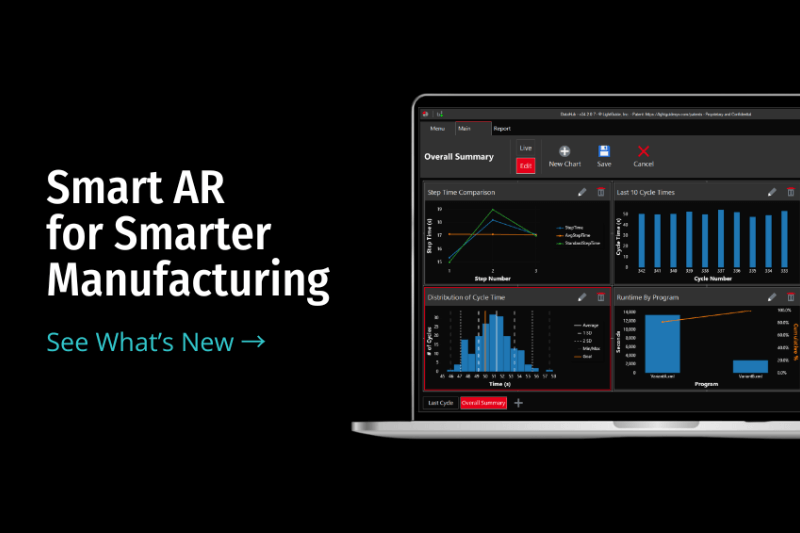
- Transform execution data into actionable insights with built-in dashboards, customizable reports, and performance analytics that identify trends, surface bottlenecks, and uncover opportunities for continuous improvement.
- Generate AI-assisted standard step times using historical workflow data and intelligent anomaly filtering to produce accurate performance benchmarks.
- Maintain clean, AI-ready data with built-in data management, anomaly detection, and automated data modeling tools that organize, clean, and structure production data for analytics and machine learning.
- Capture production snapshots and video recordings with embedded execution data to strengthen traceability, troubleshooting, training, and process analysis.
Enterprise Connectivity
- Connect seamlessly with MES, ERP, PLM, and QMS platforms, extending execution data across the digital thread for advanced reporting, data visualization, and AI analysis.
- Support secure, real-time data exchange using OPC UA and enterprise integration tools to keep execution data synchronized across manufacturing systems.
- Extend platform capabilities using our SDK, low-code tools such as Mendix and Node-RED, and AI-assisted development with Python and JavaScript to build custom workflows and enterprise integrations.
RELATED CONTENT: Explore More LightGuide Features
The Future of Manufacturing Analytics: Connecting Frontline Execution to the Digital Thread
Manufacturing’s next phase of digital transformation isn’t simply about collecting more data. It’s about connecting people, processes, and enterprise systems through a complete digital thread that extends all the way to the factory floor.
While automated processes continuously generate structured operational data, manual execution remains one of the least visible aspects of manufacturing operations. As manufacturers accelerate AI adoption, connecting that missing layer of execution data becomes increasingly important. Without visibility into how frontline work is actually performed, artificial intelligence lacks the operational context needed to generate meaningful insights.
By capturing structured data at the point of work, manufacturers gain deeper visibility into frontline execution, revealing where bottlenecks, process variation, and quality issues originate. As AI capabilities continue to evolve, this operational data becomes an increasingly valuable source of execution intelligence, enabling more advanced analysis, predictive insights, and intelligent process optimization.
LightGuide’s Augmented Intelligence platform transforms frontline execution into actionable operational intelligence by connecting workers, enterprise systems, and AI through a continuous feedback loop. As operators perform each task, execution data is automatically captured, validated, and shared across the manufacturing enterprise, transforming manual workflows into a source of operational intelligence.
The result? A manufacturing operation where frontline execution no longer exists outside the digital thread. Instead, every task generates the data needed to continuously improve human performance, enable AI-driven decision-making, and drive smarter manufacturing.

Ready to Unlock the Full Power of Your Data?
Contact us today to explore LightGuide’s Augmented Intelligence platform.